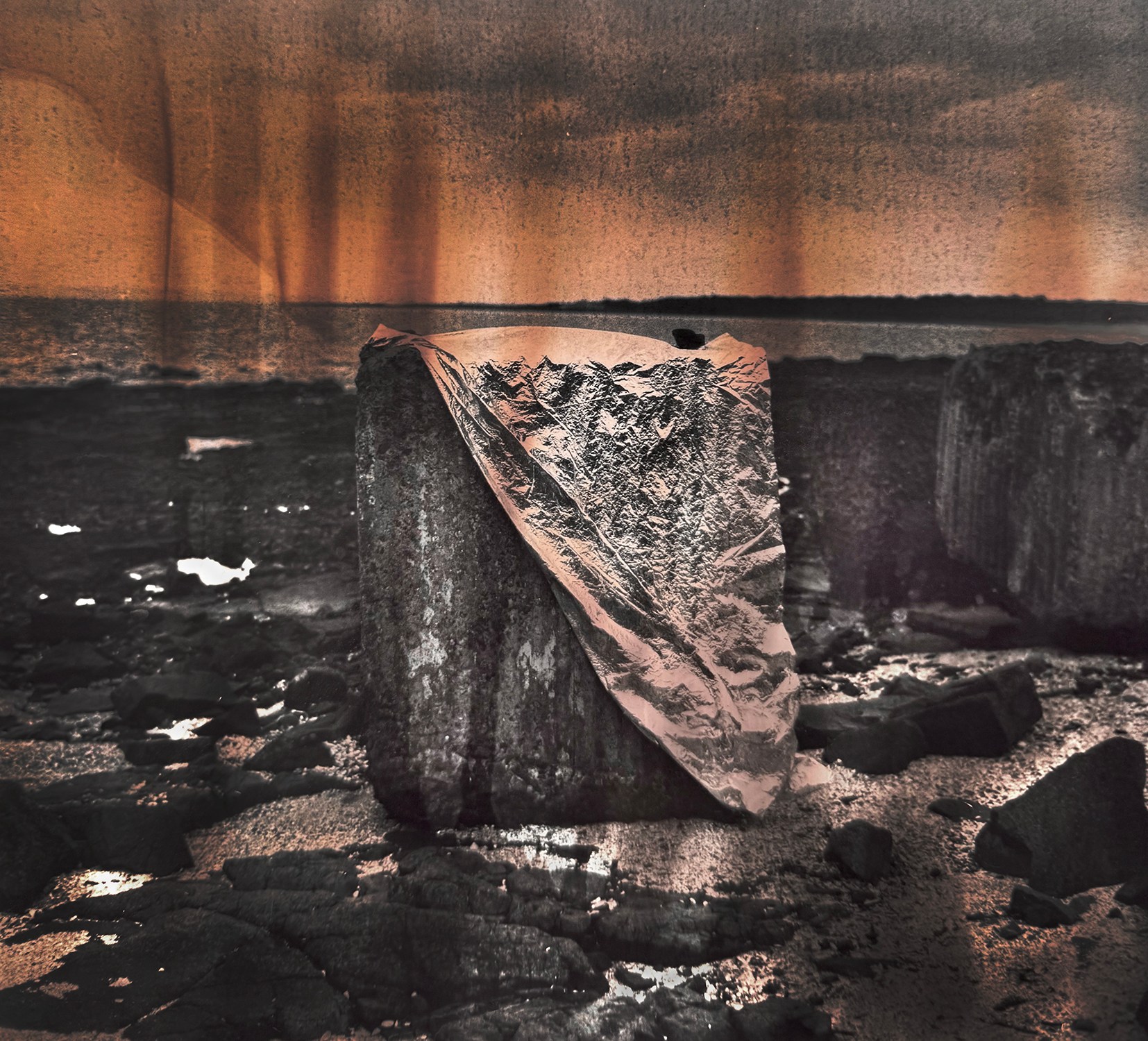
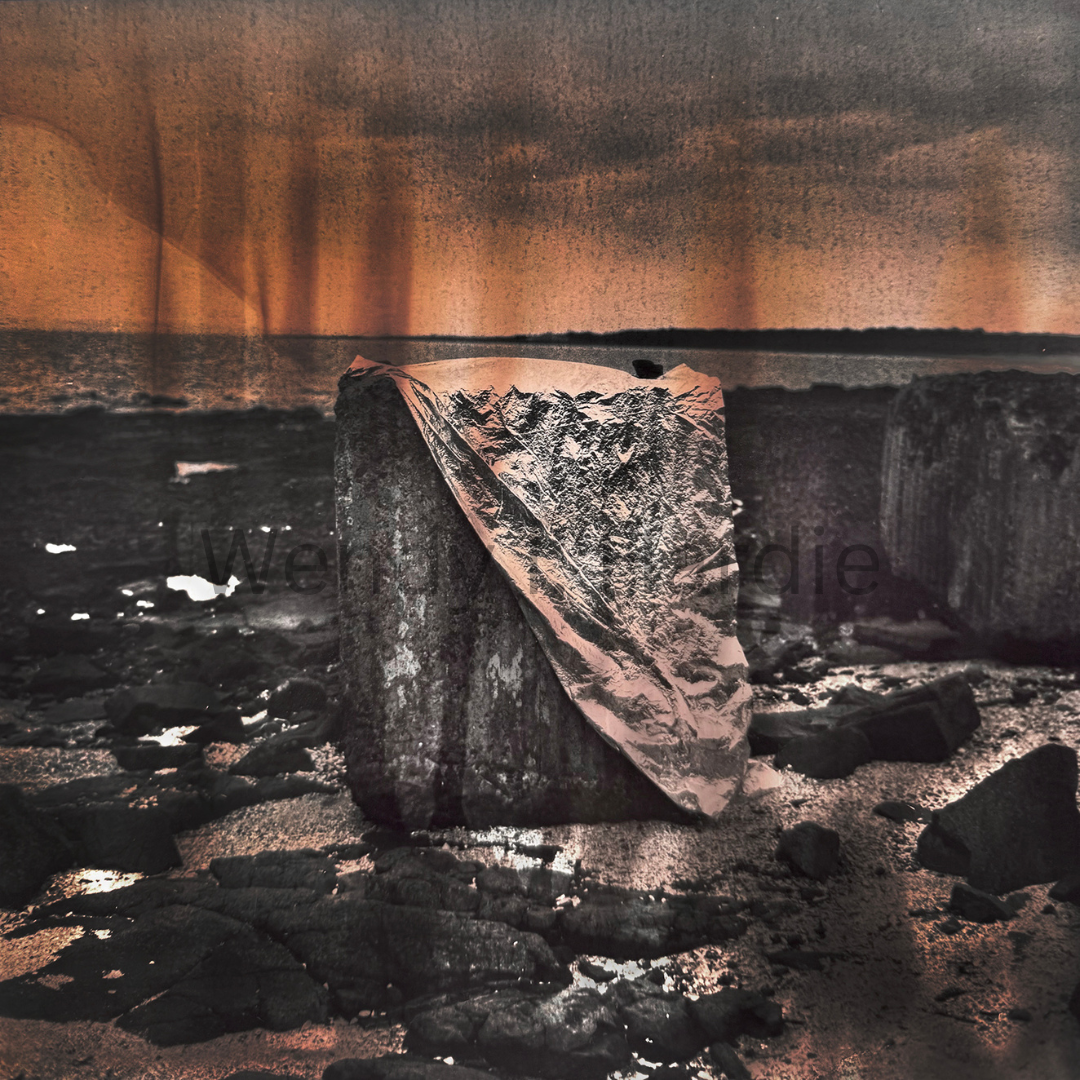
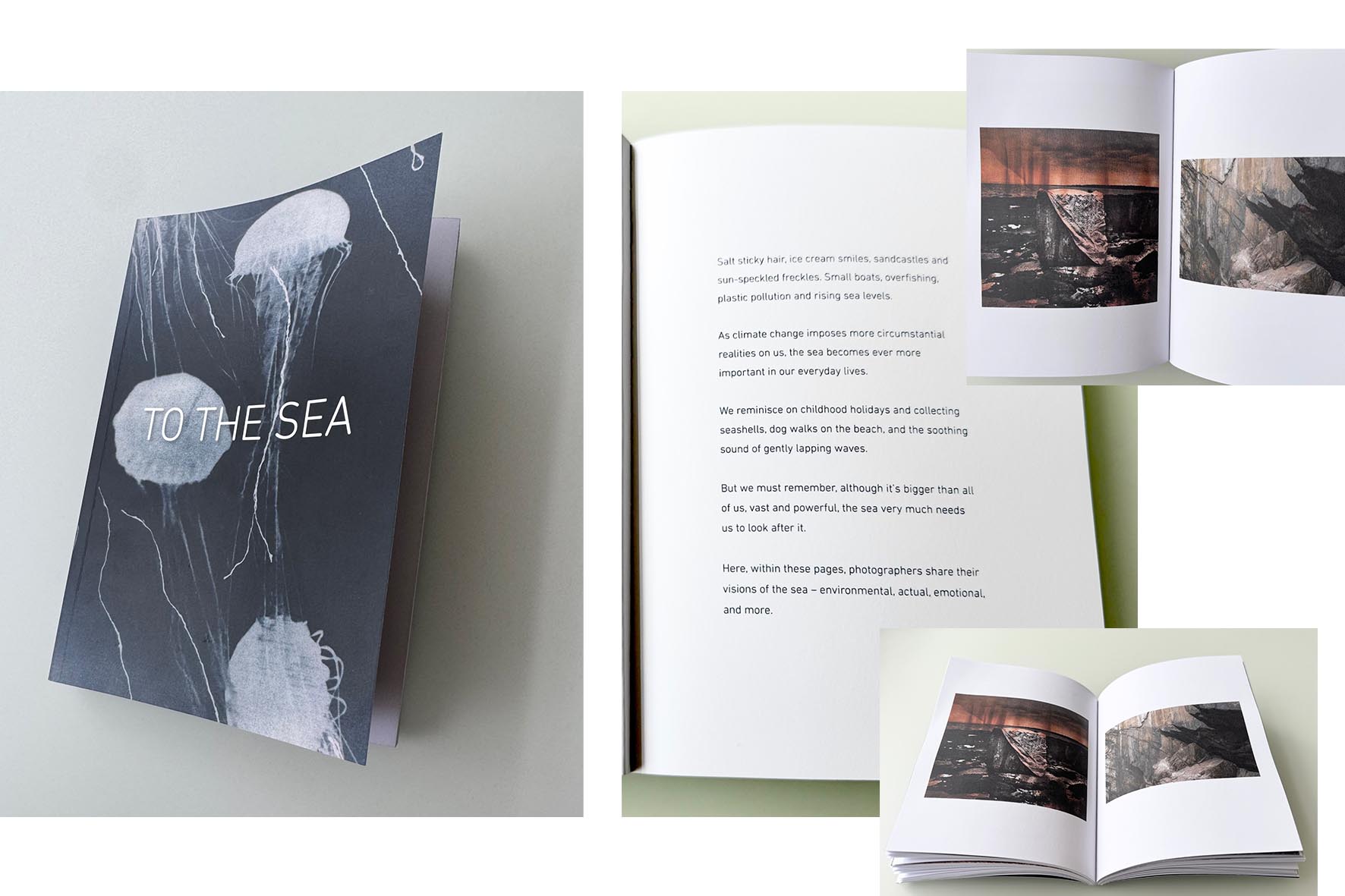
This image was chosen as 1 of 100 photographic works selected from an international open call by Shutter Hub to form their latest Editions publication ‘To The Sea’. The photograph is from artist Hardie’s expanded environmental photography series ‘folding, faulting, uplift (broken chain)’ 2024-25. This analogue photography series works integrally and contextually with plant based processes to increase it’s sustainability and to holistically embed environmental concerns and a journey towards solutions within the work itself. For this print the artist worked with seaweed sourced carefully from the coastal site it records in East Lothian, Scotland to develop and tone the work.
Hardie’s alternative process analogue photography series works with homemade plant developers, mid-century cameras (medium format, 35mm, polaroid) and homemade household waste pinhole cameras. This long form body of work, whose name borrows from a geological term to describe Scottish Enlightenment figure James Hutton’s tectonic plate discovery, commenced in July 2024 and explores the world’s current and increasing environmental and political fragility. It focuses on a handful of specific sites in east coast Scotland close to the C19th birthplace of John Muir, the father of environmental conservation, and that world significant geological discovery by Hutton, who is recognised as the father of modern geology. This discovery, known as ‘Hutton’s Unconformity’, led to the redating of the earth as vastly older, more complex and symbiotically entwined than was earlier understood.
Muir emigrated to America with his family from east coast Dunbar when he was 11yrs old but not before intensively exploring his local dramatically rugged coastline and inland woodland world, which was importantly to remain an intense inspiration for him throughout his life. He went on to explore, campaign and write about the need to save and preserve great tracts of American wilderness, including forests such as the giant west coast redwood sequoias and Yosemite, from destruction in the wake of rampant and at that point unchecked industrialization. His poetic and educational writing and campaigning convinced then President Teddy Roosevelt to set up the USA’s National Parks System saving huge, diverse, pristine landscapes for the people of America, apparently, in perpetuity.
Some of the chosen beach and coastal woodland sites of this project still have the remnants of World War Two coastal defenses, large, hand cast, cubic concrete anti-tank blocks, built to repel the then very real threat of fascist invasion from the sea. Today they form broken, eroded but still profoundly compelling serries, moving haltingly from the sea’s edge into the neighbouring knarled, coastal woods, the hauntingly elegiac legacies of ordinary men and women’s stands against human and now environmental degradation, and the power of simple acts of coming together to form chains of resistance to rebuild humanity and preserve a planet and it’s bio diversities, fit to live in for the generations ahead.
The Shutter Hub photobook ‘To The Sea’ will be published on 8th June 2025 to coincide with World Oceans Day. It will be available to purchase from chosen photography booksellers worldwide and online from Shutter Hub’s website.
To directly support the making of this environmental, long form expanded analogue photography series, this work will be available to purchase direct from the artist as a signed limited edition archival digital pigment print (with certificate of authenticity) in 3 editioned sizes. 10% after cost will be donated to Save the Children and Greenpeace. For more details direct message Wendy on her artist’s instagram account @wendyihardieartist
100 Images
An Ode To The Ocean
Something For The Sea.
© Shutter Hub 2025
Cover Image © Jo Stapleton.
Interior images:
LHS image © Wendy I. Hardie
RHS image © Anne Coveney.
 Wendy Hardie Artist - Selected Works